
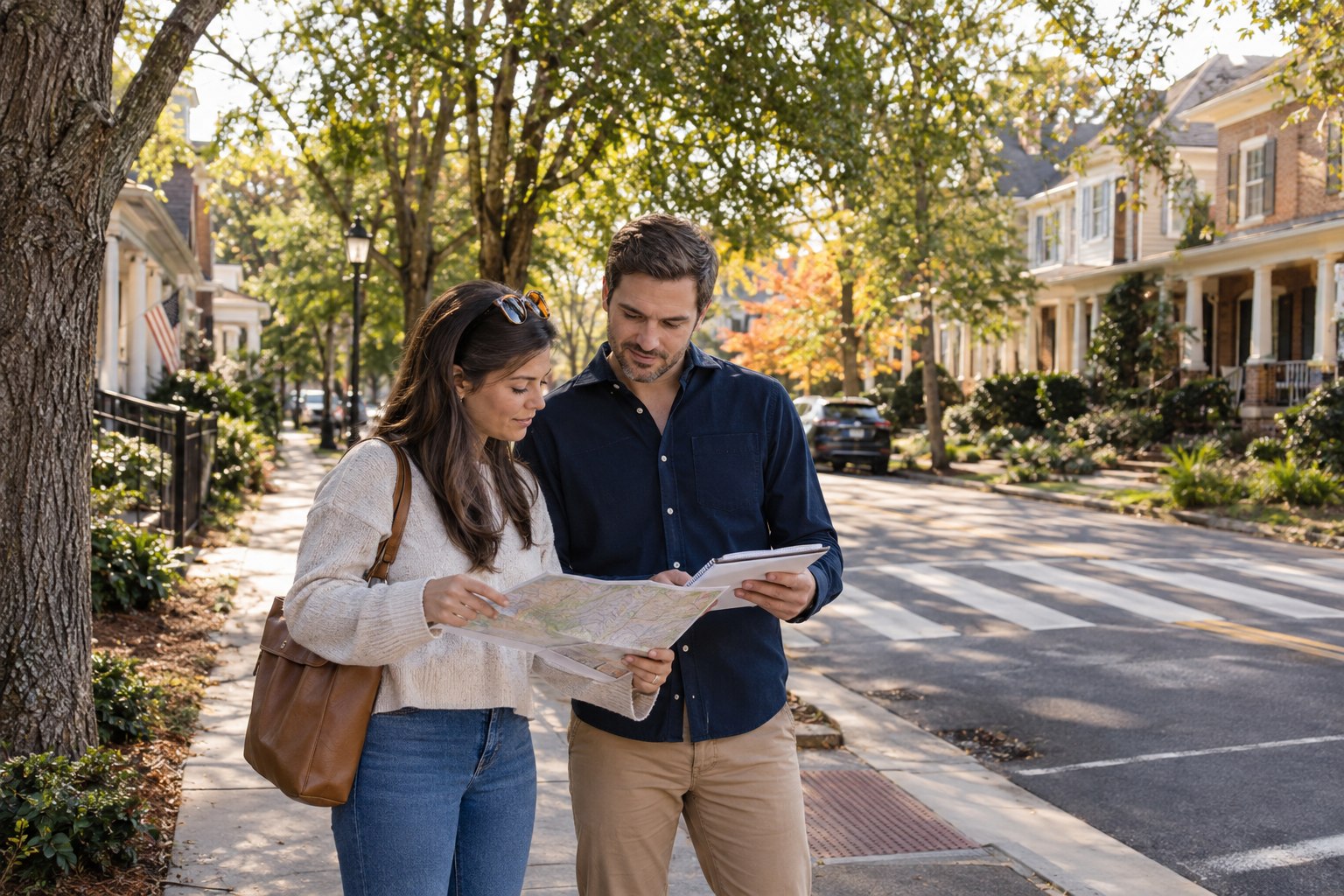
A neighborhood can feel completely different at 8:30 on a quiet Sunday morning than it does at 5:30 on a rainy Tuesday. That is why choosing where to live takes more than a quick drive-through, a star rating, or someone else's idea of the "best" place.
The goal is to find a location that works for the life you actually live: your budget, daily routes, housing needs, favorite routines, and plans for the next few years. The easiest way to make a confident comparison is to give every area the same test.
Build your scorecard before you fall for the front porch
A beautiful kitchen can make almost any location look more convenient than it is. Before touring, write down the factors that will still matter after the excitement of a new house wears off.
- Your comfortable total housing cost, including taxes, insurance, utilities, association fees, and maintenance
- The travel time you can realistically accept for work, caregiving, healthcare, or other weekly destinations
- The property features you truly need, such as accessibility, parking, lot size, or low-maintenance living
- The parks, libraries, transit, grocery stores, medical services, or other amenities you expect to use
- Any school assignment or program information you want to confirm
Use the same list for every location. A simple scorecard makes it easier to tell the difference between a place that photographs well and one that supports your everyday routine.
1. Give the commute a dress rehearsal
Ten miles can mean ten minutes or an hour depending on the route and time of day. Try the trip when you would normally make it. Test an alternate route, notice construction, and check whether school traffic or a major event changes the picture.
The official 511 Georgia map shows current incidents, construction, closures, cameras, and traffic conditions. One test drive cannot predict every Tuesday, but it is far more useful than relying on mileage alone.
2. Treat school information like an address question
School assignment is tied to an address, not a listing headline or a map pin. Start with the responsible district's current boundary or assignment tool, then confirm the specific property with the district. Boundaries, transportation, enrollment rules, and programs can change.
The NCES School and District Navigator can help you locate official public-school and district information. From there, compare the programs and details that matter to you instead of letting one composite score make the decision.
3. Look beyond today's view
That quiet field across the road may stay open, become a park, or become a construction site. Check city or county planning pages for zoning maps, rezoning cases, transportation projects, meeting agendas, and long-range plans. Look at nearby parcels as well as the home you are considering.
A proposal is not a promise, and a plan can change. If a land-use, boundary, title, or access question could make or break the purchase, ask the responsible local office how to verify it and bring in the appropriate professional when needed.
4. Put water and insurance on the early checklist
Flood questions are much easier to explore before the due-diligence clock is ticking. Search the address through the FEMA Flood Map Service Center, then ask an insurer about the specific property and available coverage.
Also pay attention to grading, drainage, nearby waterways, stormwater features, seller disclosures, and inspection findings. A flood-zone lookup is useful, but it is only one piece of the property's water and insurance story.
5. Price the location, not just the house
Two homes with the same asking price can create very different monthly lives. Compare property taxes, insurance, utilities, commuting, association fees, maintenance needs, and likely repairs. Confirm utility providers, internet availability, road maintenance, trash service, and any community rules.
If an HOA or condominium association is involved, review the current governing documents, budget, fees, assessments, insurance information, and meeting records available to you. The true cost of a location rarely fits on the listing card.
6. Visit like a future resident, not a tourist
Return at the times that matter to your routine. Notice traffic, parking, lighting, sidewalks, road condition, aircraft or rail noise, nearby land uses, and access to the places on your scorecard. Write down what you can observe rather than relying on a vague first impression.
If public-safety information is important to your decision, use current information from the responsible public agency and apply the same source and time period to every area you compare. That keeps the research consistent and the choice in your hands.
7. Keep the house and the location on separate scorecards
You can like an area and still discover that a particular home is wrong for you. Review the inspection, title, survey, easements, permits, utilities, insurance options, association documents, and repair needs on their own merits.
This separation is surprisingly helpful. It prevents a great neighborhood visit from making a cracked foundation seem less important—and keeps a gorgeous renovation from shortening an unacceptable commute.
Keep the choice yours
Good real estate guidance should expand your choices, not quietly narrow them. Your priorities should drive the search, and the same objective resources should be available no matter who you are or which community you want to explore.
Your search should get wider as you learn, not narrower because someone made assumptions about you. Federal fair-housing rules protect that freedom by prohibiting steering based on protected characteristics. Current HUD guidance also allows school or crime information to be shared when everyone receives it consistently and without discriminatory intent. The practical formula is simple: reliable sources, the same process for every area, and the final judgment left with you.
Frequently asked questions
Can an agent tell me which Georgia neighborhood is best?
An agent can help you find homes, locate objective resources, and investigate transaction facts. The most useful conversation starts with your priorities rather than someone else's neighborhood ranking.
How do I confirm the school for a particular home?
Use the responsible school district's current tools and confirm the exact address directly with the district. A listing, map pin, or third-party score is not an assignment guarantee.
Where can I check a property's mapped flood zone?
Search the address in FEMA's Flood Map Service Center, then speak with an insurer about the property and coverage options. Maps are one input and do not capture every drainage, water, or insurance concern.
How many times should I visit before buying?
There is no magic number. Visit often enough to experience the routes, access, parking, noise, and activity patterns that affect your routine. For many buyers, a weekday commute test and a separate evening or weekend visit reveal more than one long tour.
What if I find a proposed road or development nearby?
Check the responsible local government's planning, zoning, transportation, and meeting records. Ask staff how to verify the current status, and seek specialized advice if the answer could materially affect your decision.
Take the checklist on your next drive
The free Rising Star Neighborhood Test-Drive Checklist gives you one place to record commute, property, planning, school, service, cost, flood, and repeat-visit notes for every area you consider.
Keep planning
- Search current Georgia listings
- Review live local market reports
- Get the Georgia Homebuyer Planning Kit
- Browse Georgia guides and tools
Sources behind this guide
- HUD: neighborhood information and fair-housing guidance
- 24 CFR 100.70: prohibited steering and other housing conduct
- NCES School and District Navigator
- 511 Georgia traffic and road information
- FEMA Flood Map Service Center
We reviewed these sources on October 13, 2026. Because school boundaries, public plans, fees, insurance requirements, and traffic patterns evolve, use the links above to refresh the details that matter when a particular home reaches your short list.
Rising Star Properties created this guide and its planning tools to make that research easier. When your search turns into a transaction, a licensed professional with Rising Star Realty Group, LLC—or the brokerage identified when you choose your agent—can help you apply the findings to the home and contract in front of you.