
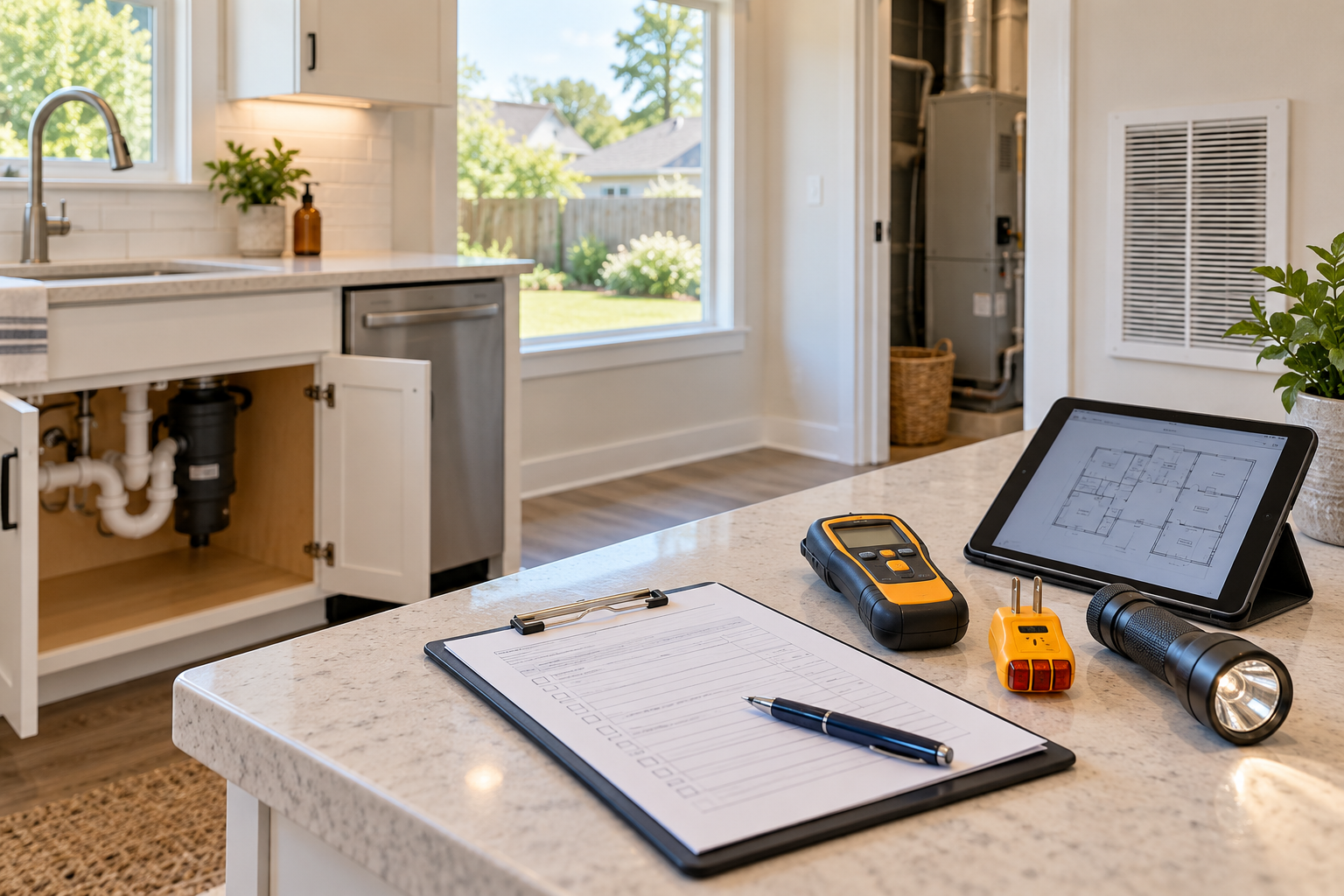
A home inspection helps a Georgia buyer understand a property's visible condition before the contract deadlines expire. Schedule an independent inspection promptly, attend if possible, review the full report, and use qualified specialists when an issue falls outside the inspector's scope. Your signed purchase agreement controls your deadlines and available choices, so review the report with your licensed real estate professional and, when appropriate, a Georgia real estate attorney.
This guide turns a long inspection report into a practical decision process. It is educational information, not legal, engineering, environmental, or financial advice.
What is the difference between a home inspection and an appraisal?
A home inspection and an appraisal answer different questions. An independent inspector evaluates observable property conditions and explains findings to the buyer. An appraisal primarily supports a lender's value and collateral decision. The Consumer Financial Protection Bureau and HUD both warn buyers that an appraisal does not replace a home inspection.
Even when a loan program includes property standards, buyers should not assume the lender's process provides the same information as a buyer-directed inspection.
What should a Georgia buyer do before the inspection?
- Confirm the deadline. Ask your agent to identify the exact inspection and due-diligence dates in your signed contract. Do not rely on a typical timeline.
- Hire an independent inspector promptly. Review experience, references, the standards of practice, and a sample report. Ask what is included, excluded, and available for an additional fee.
- Share relevant property information. Tell the inspector about additions, crawl spaces, pools, septic systems, wells, detached structures, or other features that may require added time or a specialist.
- Plan to attend. Being present can help you understand the severity, location, and maintenance implications of a finding.
- Leave time for follow-up. A general inspection may identify a need for a roofer, structural engineer, electrician, plumber, HVAC contractor, pest professional, septic professional, or other qualified expert.
What should you review during a home inspection?
Inspection scope varies, so confirm it with the inspector. A buyer will commonly want clear information about these major systems and conditions:
- roof coverings, flashing, drainage, and visible signs of leakage;
- foundation, crawl space, basement, grading, and visible moisture intrusion;
- electrical service, panels, accessible outlets, and visible safety concerns;
- plumbing supply, drains, water heater, fixtures, and visible leaks;
- heating and cooling equipment, age information when available, and basic operation;
- attic access, insulation, ventilation, doors, windows, stairs, and railings;
- built-in appliances and other components included in the inspector's stated scope.
A general inspection is not a guarantee that every defect will be found. Read the limitations section of the report and ask what could not be accessed or tested.
When should you consider additional testing?
The property's age, location, utilities, construction, and inspection findings may justify specialized testing. Ask qualified professionals whether you should evaluate radon, wood-destroying organisms, sewer or septic components, private well water, mold or indoor air concerns, lead-based paint, pools, chimneys, or structural conditions.
The EPA recommends radon testing when buying or selling a home. A prior result can be useful context, but buyers should review when and how the test was performed and whether property conditions have changed.
How should you prioritize the inspection report?
Do not treat every line item as equally urgent. Sort findings into four working groups:
- Safety or active damage: conditions that may need prompt professional evaluation.
- Major systems: roof, structure, electrical, plumbing, HVAC, drainage, and other high-impact components.
- Deferred maintenance: items that may become more expensive if ignored.
- Routine or cosmetic items: ordinary ownership tasks and preferences that may not affect the transaction decision.
For any material concern, ask for scope, likely next step, and an estimate from an appropriately qualified contractor. The inspector identifies conditions; the specialist can define a repair approach and cost range.
What can happen after the inspection?
Your options depend on the purchase agreement, the findings, the deadline, and the parties' decisions. A buyer may decide to proceed, request more information, seek professional estimates, propose a repair or credit, renegotiate another term, or consider a contract remedy that is actually available. The seller may accept, reject, or counter a request.
Keep requests focused on material concerns and support them with the relevant report page or specialist documentation. Your licensed agent can help organize the business discussion; an attorney should answer legal questions about rights, notices, contract language, or termination.
Should you inspect a new-construction home?
New does not mean every component is complete or correctly installed. Buyers can ask their agent, builder, lender, and inspector about appropriate inspection stages, access rules, warranty procedures, and deadlines. An independent review may identify incomplete work, installation concerns, or questions to resolve before closing or a warranty milestone.
Georgia home inspection checklist
- Locate every contract deadline.
- Select an independent inspector and review the scope.
- Attend the inspection when possible.
- Ask what was inaccessible or excluded.
- Order specialist evaluations early when needed.
- Separate major concerns from routine maintenance.
- Obtain estimates for material findings.
- Review choices before the applicable deadline.
- Keep reports, invoices, warranties, and repair documentation.
Frequently asked questions
How soon should I schedule a home inspection?
Schedule it as soon as the contract permits. Your signed agreement controls the deadline, and you may need time for specialist evaluations or estimates after the general inspection.
Does a home appraisal replace an inspection?
No. An appraisal addresses value and lender requirements; an inspection is a buyer-directed review of observable property conditions.
Can an inspection tell me how much every repair will cost?
Usually not. Inspectors identify conditions within their scope. Qualified contractors or specialists can define repair methods and provide estimates.
Can I cancel after a bad inspection?
That depends on the exact contract terms, notices, deadlines, and facts. Ask your licensed agent for transaction guidance and a Georgia real estate attorney for legal advice.
Prepare before you make an offer
Rising Star Properties can help you search current Georgia listings and connect with licensed real estate professionals who can help you plan showings, offers, inspections, and transaction deadlines.
Start your Georgia home search and request buyer guidance
For the broader process, read the Georgia Home Buying Guide.
Sources and review date
- Consumer Financial Protection Bureau: Schedule a home inspection
- U.S. Department of Housing and Urban Development: Home Inspection notice
- U.S. Environmental Protection Agency: Radon resources for real estate
Sources reviewed October 8, 2026. Rising Star Properties is the website and lead-generation business unit. Licensed real estate services are provided by appropriately licensed professionals through Rising Star Realty Group, LLC or the applicable brokerage identified at engagement.